
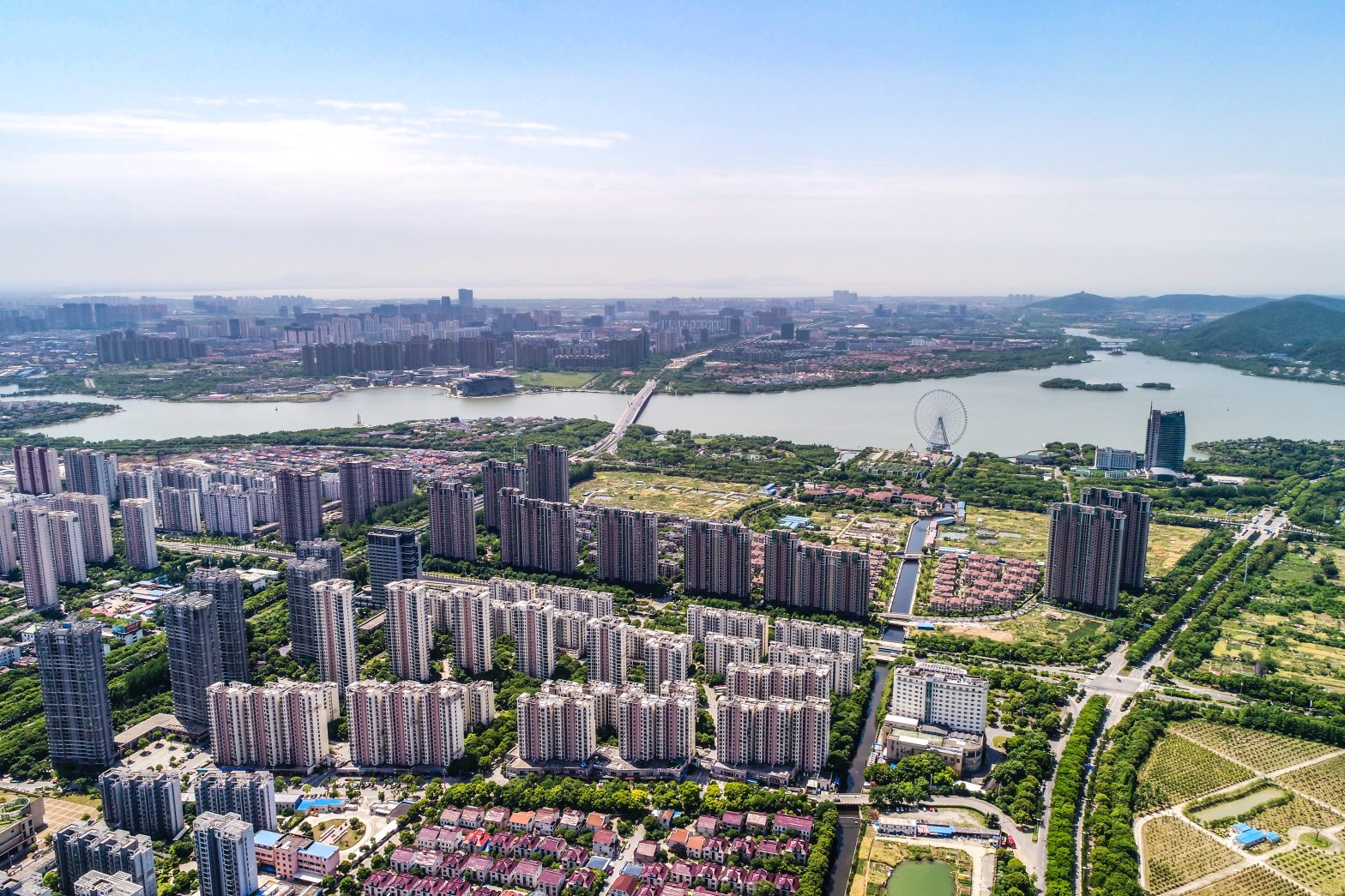
Top Reasons to Invest in Residential Projects in Noida This Year
In the continually changing landscape of India’s property market, Noida has long proven to be a prime destination for sharp investors and future-focused homebuyers. Continuous expansion in infrastructure, steadily improving connectivity, and advanced planned development mean the city remains one of the strongest choices in the National Capital Region.
If you’re weighing a real estate investment, this year presents a genuine opportunity to explore residential projects in Noida. Whether you’re looking to settle down, secure your family’s future, or simply grow your portfolio, Noida offers a rare blend of value, lifestyle, and long-term growth potential – backed by infrastructure that, in several cases, has now moved from “planned” to “operational.” For a step-by-step walkthrough of the process itself, see our guide to Your Complete Guide to Buying Flats in Noida.
Being a reputable name in Indian real estate, ATS Greens takes pride in helping shape Noida’s growth – designing homes that combine luxury, comfort, and sustainability. In this guide, we go well beyond a simple list of reasons to invest, and walk through the data, comparisons, and decision factors that any serious Noida homebuyer or investor should understand before committing capital.
Why Noida Has Become One of India’s Fastest-Growing Real Estate Markets
Noida’s rise hasn’t been accidental. It’s the product of a few specific, reinforcing trends that have compounded over the past decade.
- Planned urban development – Unlike many older Indian cities, large parts of Noida and Greater Noida were master-planned from the outset, with wider roads, designated green belts, and phase-wise sector development
- Corporate expansion – A steady influx of IT parks, BPOs, and corporate offices has anchored genuine local employment demand, rather than relying purely on speculative buying
- Expressway network – The Noida–Greater Noida Expressway, Yamuna Expressway, and FNG corridor have collectively cut commute times across what used to be disconnected pockets of the NCR
- Metro connectivity – The Aqua Line and broader Delhi Metro network have made several previously overlooked sectors significantly more attractive to both end-users and investors
- Demand from professionals – A young, working population employed across Noida’s commercial corridors has created sustained housing demand that isn’t purely cyclical
Why This Year Is a Good Time to Invest in Noida
Timing matters in real estate, and a few specific developments make this a particularly relevant year to take a serious look at Noida.
- Infrastructure nearing completion – several long-discussed projects have moved from construction to actual operation, changing them from a speculative upside to a demonstrated one
- Mature residential sectors – sectors that were under-construction five to seven years ago have now matured into liveable, fully serviced neighbourhoods, reducing the uncertainty that comes with buying into a sector that’s still being built out
- Growing premium housing demand – buyer preference has shifted decisively toward larger, amenity-rich homes, and supply in this segment remains comparatively limited
- Airport-led growth – Noida International Airport at Jewar moved from a multi-year construction project to live commercial flight operations in June 2026, a milestone that tends to shift investor sentiment meaningfully for the surrounding corridor
- Corporate expansion – continued growth in Noida’s IT and corporate footprint keeps adding to the base of working professionals who need housing nearby
There’s also a financing angle worth noting. The RBI has held the repo rate steady at 5.25% through its recent policy reviews, following a series of rate cuts through 2025. That’s left home loan interest rates hovering near multi-year lows – broadly in the 7.1% to 9.5% range depending on the borrower’s profile – which makes financing a purchase comparatively more affordable than it’s been in some time. Rates can move in either direction from here, so this isn’t a guarantee of anything, but a stable, low-rate environment is generally a more favourable backdrop for a property purchase than a rising-rate one.
Infrastructure Driving Property Appreciation
It’s not enough to simply list infrastructure projects – what actually matters to a buyer or investor is how each piece of infrastructure translates into real demand and pricing power.
Noida–Greater Noida Expressway
This corridor effectively functions as the spine of Noida’s growth story. By cutting travel time between residential sectors and commercial hubs, it has directly supported price appreciation in every sector it touches, simply by making those sectors genuinely commutable.
Yamuna Expressway
Originally built primarily for travel toward Agra, this expressway has taken on a second life as the connective backbone for the entire Jewar airport corridor, pulling formerly peripheral land into the city’s serious investment conversation.
Aqua Line Metro
Metro access changes how a sector is perceived by buyers who don’t want to be entirely dependent on private vehicles. Sectors near Aqua Line stations have generally seen stronger sustained demand than comparable sectors without metro access.
FNG Expressway
Once complete, the Faridabad–Noida–Ghaziabad corridor is intended to link three major NCR cities directly, which would meaningfully widen the commuting catchment for Noida’s residential sectors and, by extension, the pool of potential buyers and tenants.
Noida International Airport
The shift here is significant: this is no longer a future promise but an operating facility, having begun commercial flights in June 2026. Operational infrastructure tends to move buyer and investor sentiment faster than infrastructure that’s merely under construction, because the uncertainty around delivery timelines disappears.
Film City
The proposed Film City project along the Yamuna Expressway, if it proceeds on its planned scale, would bring a meaningful new category of employment and commercial activity to the corridor – the kind of demand driver that tends to support both residential and rental appreciation in the surrounding sectors.
IT and Corporate Parks
Each new corporate park effectively anchors a fresh wave of housing demand nearby, since employees overwhelmingly prefer shorter commutes. This is one of the more reliable, less speculative drivers of sustained rental and resale demand.
Value Appreciation and Housing Variety
Noida’s property rates remain relatively lower than Gurgaon or central Delhi, which keeps the market accessible to both first-time homebuyers and long-term investors. The past several years have seen meaningful appreciation in both rental yields and capital value across sectors like 150, 93, and Greater Noida West, and as future-ready townships and green-certified properties increasingly become the norm rather than the exception, that trend looks set to continue.
Part of what makes this appreciation broad-based rather than confined to a single segment is the sheer range of housing on offer. From relatively affordable apartments to ultra-luxury penthouses, Noida has genuine options across the spectrum. ATS Greens alone spans that range – a 3 BHK family apartment at ATS Destinaire, a wellness-oriented home at ATS Kingston Heath, or a palatial residence at ATS Knightsbridge are all, in a meaningful sense, the same underlying market. That variety, combined with planned town layouts and consistent green belts across sectors, makes it considerably easier for buyers to find something that actually matches their specific expectations, rather than compromising on location or lifestyle to fit a narrow product range.
Lifestyle, Rental Demand, and Government Support
Three additional factors round out why Noida’s residential market has stayed resilient: what homebuyers actually get day to day, who’s renting, and how policy has shaped affordability.
Contemporary Lifestyle Expectations
Homebuyers today expect considerably more than four walls and a roof. Across most premium developments, that now typically includes green spaces and parks, clubhouses and gymnasiums, pools and running tracks, and smart home technology paired with modern security systems. ATS Greens builds these into its residential projects as standard rather than as an upsell, aiming to create functioning communities rather than just standalone buildings – a combination of luxury, fitness, and social interaction that works as well for families and working professionals as it does for retirees.
Robust Rental Demand
With a large and growing base of professionals working across Noida and Greater Noida’s IT parks, multinational offices, media companies, and startups, rental housing demand has stayed consistently strong. For an investor, that typically translates into a few practical benefits: periodic rental income, healthy occupancy levels, and steady value appreciation over the holding period. Areas close to established business hubs – Sectors 62, 63, 135, and 142 in particular – see especially strong tenant demand, and properties from established developers in these sectors tend to be the first to fill because of the trust and quality buyers and tenants already associate with the brand.
Government Initiatives and Buyer Benefits
Policy support has also made ownership more accessible than it might otherwise be. Schemes such as the Pradhan Mantri Awas Yojana, along with periodic stamp duty relief in Uttar Pradesh, have lowered the effective cost of buying for eligible homebuyers. RERA registration requirements have added a genuine layer of transparency and accountability for developers, which directly protects buyer interests – it’s one of the more concrete reasons the checklist later in this guide treats RERA verification as non-negotiable. Combined with home loan rates that, as covered earlier, are sitting near multi-year lows, and developers offering increasingly flexible payment plans, the financing and policy backdrop for buying in Noida right now is about as favourable as it’s been in some time.
Best Sectors to Invest in Noida
Different sectors serve different investment goals. Here’s a practical breakdown of where various types of buyers tend to find the best fit.
Sector | Best For |
Sector 150 | Luxury & Wellness |
Sector 124 | Ultra Luxury |
Greater Noida West | Value Appreciation |
Yamuna Expressway | Long-Term Growth |
Sector 150 has built a reputation around low-density, wellness-oriented living, with projects like ATS Kingston Heath setting the tone for that positioning (see our full breakdown of luxury apartments in Sector 150). Sector 124 sits firmly in the ultra-luxury bracket, exemplified by developments like ATS Knightsbridge. Greater Noida West remains the city’s strongest value-appreciation play, where projects like ATS Destinaire and ATS Picturesque Reprieves offer relatively accessible entry points with genuine upside. And the Yamuna Expressway corridor has become the long-term growth story of the moment, now backed by an operational airport rather than a speculative one.
Residential Property vs Commercial Property in Noida
Many investors weigh residential against commercial property without fully accounting for how differently the two behave.
Residential | Commercial |
Lower risk | Higher entry cost |
Stable demand | Market dependent |
End-user demand | Investor driven |
Easier financing | Higher capital requirement |
Residential property in Noida benefits from a large, steady base of end-user demand – people who need somewhere to live regardless of broader market cycles – along with comparatively easier access to home loan financing. Commercial property can offer stronger yields, but it typically demands a larger upfront capital outlay, is more sensitive to broader economic conditions, and depends more heavily on attracting and retaining the right tenants. For most individual buyers and first-time investors, residential property remains the more straightforward and lower-risk entry point into the Noida market.
Why Luxury Housing Is Outperforming
Across Noida, the luxury segment has been growing faster than the broader market, and a few specific shifts explain why.
- Demand for larger homes – buyers increasingly want space for dedicated work areas, not just bedrooms, a shift that’s persisted well past the initial remote-work period
- Hybrid work – with fewer mandatory daily commutes, buyers are more willing to prioritise home quality and surroundings over sheer proximity to an office
- Wellness communities – developments built around green space, walkability, and genuine amenities (rather than decorative ones) are seeing disproportionately strong demand
- Premium amenities – clubhouses, sports facilities, and concierge-style services have moved from differentiator to baseline expectation in the luxury bracket
- Lifestyle upgrades – a meaningful share of luxury demand now comes from existing Noida residents upgrading from smaller homes, not just new entrants to the market
Which Property Type Should You Buy?
The right property type depends heavily on who’s buying and why. Here’s a practical starting point.
Buyer | Recommendation |
First-time buyer | 2–3 BHK |
Growing family | 3–4 BHK |
Luxury buyer | Premium residences |
Investor | High-growth sectors |
NRI | Ready-to-move luxury apartments |
First-time buyers generally do best starting with a 2–3 BHK in a sector with solid fundamentals rather than overstretching for size. Growing families tend to need the flexibility of a 3–4 BHK layout. Luxury buyers are typically optimising for lifestyle and amenities over pure square footage value. Investors should weigh high-growth sectors over already-mature ones, where appreciation potential tends to be higher. NRIs, who often can’t supervise construction progress closely from abroad, are generally better served by ready-to-move luxury apartments that remove that uncertainty entirely.
Factors to Evaluate Before Investing
- Builder reputation – check actual delivery history against promises, not just brochure claims
- RERA registration – confirm the project is properly registered and review its disclosed timelines
- Connectivity – verify real commute times to relevant hubs, not just proximity on a map
- Social infrastructure – assess access to schools, healthcare, and retail, both current and planned
- Rental demand – evaluate the area’s existing tenant base if rental income is part of your plan
- Future development – understand what’s planned nearby, since it can affect both lifestyle and resale value
- Construction quality – inspect materials and finishing standards directly wherever possible, rather than relying solely on marketing material
- Open space – check the actual ratio of green, usable open space to built-up area
- Maintenance – understand recurring charges and how they’re structured before committing
Why ATS Greens Projects Stand Out
Rather than listing projects generically, it’s more useful to think about them by what each is actually built around.
Wellness Living – ATS Kingston Heath
Built around low-density planning, extensive green space, and genuinely wellness-first design, ATS Kingston Heath in Sector 150 caters to buyers who prioritise daily quality of life as much as square footage.
Sustainable Living – ATS Destinaire
Set in Greater Noida West around a dense, Miyawaki-method forest of over 50,000 trees, ATS Destinaire pairs genuine sustainability credentials with family-friendly 3 and 4 BHK layouts.
Ultra Luxury – ATS Knightsbridge
In Sector 124, ATS Knightsbridge sits at the top end of the spectrum, offering expansive 4 and 6 BHK residences for buyers prioritising exclusivity and long-term flagship value.
Golf-Course Living – ATS Picturesque Reprieves
For buyers drawn to nature-facing, long-term residential living, ATS Picturesque Reprieves offers a quieter, green-oriented alternative within the broader ATS portfolio.
Premium Gurgaon Living – ATS Marigold
For buyers looking slightly outside Noida, ATS Marigold in Sector 89A extends the same quality philosophy to a premium Gurgaon address near the Dwarka Expressway corridor.
Beyond the Numbers: Quality of Life
Investment fundamentals matter, but it’s worth remembering that Noida is, first and foremost, a place people actually live. It’s one of the greener cities in the NCR, with lakes, parks, and well-maintained roads woven into its layout from early planning stages rather than added as an afterthought. World-class healthcare facilities, well-regarded schools, a growing food and dining scene, and large retail destinations have made the city largely self-sufficient – residents increasingly don’t need to travel into Delhi for the things that used to require it. For families and retirees in particular, that combination of security, calm, and proximity to daily essentials is as much a part of the investment case as the appreciation numbers, since it directly affects rental desirability and long-term liveability.
Investment Outlook for Noida
It’s worth being precise about what the outlook actually supports, without overstating it.
- End-user demand remains the most reliable driver of Noida’s residential market, anchored by the city’s growing professional workforce
- Rental demand has stayed consistently strong near established commercial corridors such as Sectors 62, 63, 135, and 142
- Infrastructure-led appreciation has historically tracked closely with major project completions – and several such completions, including the airport, have now actually happened rather than remaining on a timeline
- Premium housing demand continues to outpace supply in several well-located sectors
- The long-term outlook remains constructive, though, as with any real estate market, returns are not guaranteed and depend on sector-specific factors, holding period, and broader economic conditions
None of this should be read as a promise of specific returns. Real estate values move with macroeconomic conditions, local supply, and policy decisions that are impossible to predict with certainty – the most useful approach is to treat the factors above as context for your own judgment, not as a forecast.
Common Mistakes Buyers Make
- Buying purely on price – the cheapest option in a sector is rarely the best long-term value if it comes with weaker construction, connectivity, or builder reliability
- Ignoring connectivity – a great price means little if the daily commute turns out to be impractical
- Overlooking builder reputation – delivery delays and quality issues are far more common with unproven developers, regardless of how attractive the initial pitch is
- Not checking future infrastructure – buyers sometimes miss upcoming developments, positive or negative, that will directly affect their property’s value
- Choosing poor floor plans – a layout that looks fine on paper can feel cramped or impractical in daily use; visiting a sample flat or similar delivered project is worth the effort
Final Thoughts
Noida’s investment case in 2026 rests on a few concrete pillars: infrastructure that has increasingly moved from promise to reality, strong and sustained connectivity improvements, growing premium housing demand, and a long-term growth trajectory that’s held up across multiple market cycles. None of this guarantees outsized returns, but it does mean the fundamentals supporting Noida’s residential market are more substantive than they were even a few years ago.
Whether you’re a first-time buyer, a growing family, or an investor evaluating where to deploy capital, residential projects in Noida offer a genuinely wide range of options to match your specific goals. And when it’s time to translate that research into an actual decision, ATS Greens’ portfolio – spanning wellness living at ATS Kingston Heath, sustainable design at ATS Destinaire, ultra-luxury at ATS Knightsbridge, and nature-facing living at ATS Picturesque Reprieves – offers a practical starting point built on more than two decades of delivery in this market.
Frequently Asked Questions
1. Is Noida a good place to invest in property?
Yes, for most buyer profiles. Noida combines planned infrastructure, strong connectivity, sustained end-user demand, and comparatively accessible pricing relative to Delhi or Gurgaon, though specific returns depend on sector, project, and holding period.
2. Which sectors are best for residential investment in Noida?
It depends on your goal: Sector 150 suits luxury and wellness-focused buyers, Sector 124 suits ultra-luxury buyers, Greater Noida West suits value-appreciation seekers, and the Yamuna Expressway corridor suits long-term growth investors.
3. Is luxury housing a good investment?
Luxury housing in Noida has been outperforming the broader market recently, driven by demand for larger homes, wellness-oriented communities, and premium amenities, though it typically requires a higher upfront investment.
4. What makes Sector 150 attractive?
Low-density planning, extensive green cover, strong expressway and metro connectivity, and a concentration of premium projects make Sector 150 one of Noida’s most sought-after luxury addresses.
5. Is Greater Noida West a good investment?
Yes, particularly for buyers prioritising value appreciation. It offers a relatively accessible entry point combined with maturing infrastructure and a growing base of established residential communities.
6. Which ATS project is best for investors?
It depends on your strategy: ATS Destinaire suits value-appreciation and family-oriented buyers in Greater Noida West, while ATS Knightsbridge suits investors targeting the ultra-luxury, long-term flagship segment.
7. How does Noida International Airport impact property prices?
Noida International Airport at Jewar moved from a planned project to live commercial operations in June 2026. Operational infrastructure of this scale has historically supported stronger buyer and investor sentiment along the surrounding corridor than infrastructure still under construction.
8. What should I check before buying a home in Noida?
At minimum, verify RERA registration, builder reputation and delivery history, real-world connectivity, social infrastructure, construction quality, and the project’s actual open-space ratio before committing.
9. Is it better to buy ready-to-move apartments?
Ready-to-move apartments remove construction-timeline risk entirely, which makes them particularly suitable for NRIs and buyers who can’t closely monitor a project’s progress. Under-construction properties can offer better pricing but carry more delivery uncertainty.
10. What is the future of Noida real estate?
The long-term outlook is constructive, supported by maturing infrastructure, sustained end-user and rental demand, and growing premium housing demand, though as with any real estate market, actual returns depend on broader economic conditions and shouldn’t be treated as guaranteed.